Hip Labral Tear Treatment in Bangalore for Hip Joint Pain
You felt a sharp catch in your groin after getting out of the car. Or maybe it’s a deep, persistent ache that’s been nagging you for months, especially after sitting through a long workday or a movie. You’ve tried stretching and rest, but the discomfort keeps coming back, and sometimes your hip even clicks or locks.
What you’re describing might be a hip labral tear — an injury to the ring of cartilage that lines and seals your hip socket. It’s a common cause of hip and groin pain, particularly in active people, but it’s also frequently missed or mistaken for a simple muscle strain. At our clinic in Bangalore, we understand how frustrating and limiting this pain can be. Led by Dr. Raghavendra Kembhavi, a fellowship-trained arthroscopic surgeon, our team focuses on accurately diagnosing the source of your pain and preserving your natural hip joint through advanced, minimally invasive techniques.
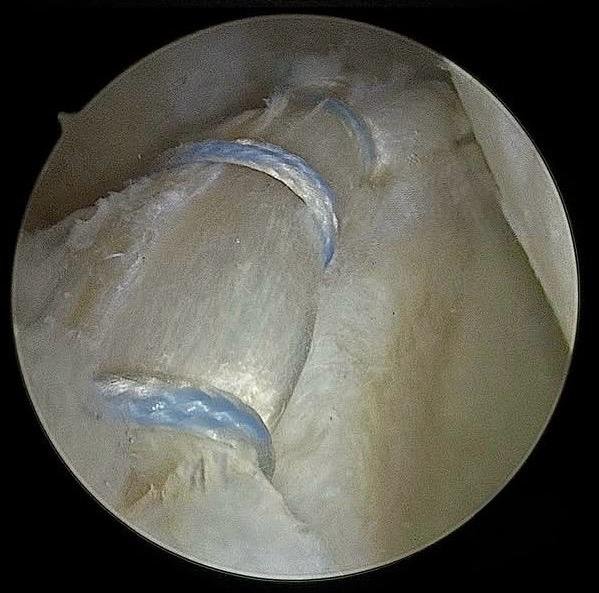
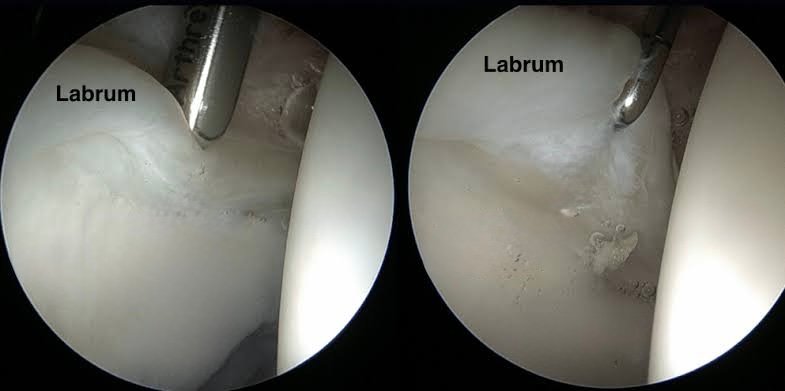
Think of your hip labrum as a gasket or a seal around the rim of your hip socket. It’s made of tough, fibrous cartilage and serves a few crucial purposes: it deepens the socket to keep the ball of your thigh bone stable, provides a suction seal that lubricates the joint, and helps distribute pressure during movement
When this labrum tears, it can cause a range of problems. It might not heal on its own because it has a limited blood supply. The most common causes include structural issues like Femoroacetabular Impingement (FAI), where the bone shapes cause abnormal rubbing, or from repetitive twisting movements in sports like hockey, golf, or dancing. Sometimes, a single traumatic injury or even gradual wear and tear over time can lead to a tear
Left unaddressed, a torn labrum can lead to further cartilage damage and early-onset osteoarthritis. That’s why getting a precise diagnosis is so important — not just to treat the pain, but to protect the long-term health of your hip.
Common Symptoms of a Hip Labral Tear
Symptoms can vary widely. Some people have a sharp, specific pain, while others describe a dull, persistent ache. You might notice these signs:
Groin Pain
A deep ache or sharp pain in the front of the hip or groin — often the most noticeable symptom.
Clicking or Catching
A sensation of popping, clicking, or locking when you move your hip.
Stiffness and Limited Motion
Your hip may feel tight or weak, and you might not be able to move it through its full range like before.
Pain with Sitting or Squatting
Symptoms often worsen after prolonged sitting, or with movements that involve deep hip flexion like squatting.
Diagnosis of Hip Labral Tears
Getting an accurate diagnosis is the first step toward effective treatment. A hip labral tear can be tricky to identify because the symptoms often overlap with other hip conditions. Dr. Raghavendra Kembhavi begins with a thorough clinical history and physical examination, using specific tests to reproduce the pain and assess your hip’s range of motion.
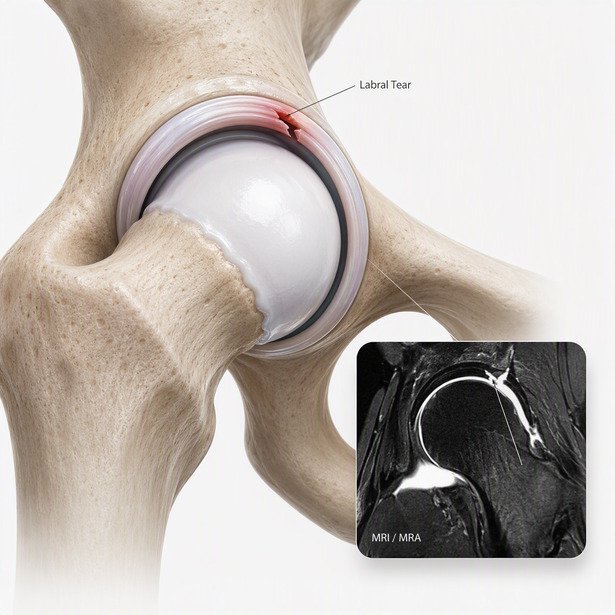
Imaging & Confirmation
While X-rays are used to look for signs of impingement or arthritis, an MRI arthrogram (MRA) is the imaging study of choice. This involves injecting a small amount of contrast dye into the hip joint before the MRI, which helps make a labral tear much more visible. In some cases, a diagnostic injection of local anesthetic into the joint can help confirm the hip as the source of your pain.
Treatment Approach
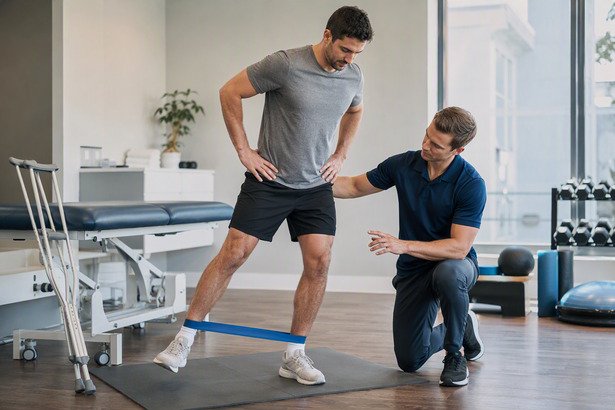
Every treatment plan is personalized. For many patients, especially those with minor tears or no mechanical symptoms, a course of non-surgical care is the first step. This focuses on activity modification and a targeted physical therapy program to strengthen the muscles around the hip and improve stability.
When Surgery Becomes Necessary
If conservative measures don’t provide lasting relief, or if there is a mechanical block to your movement, surgery may be recommended. The gold standard for treating a labral tear is hip arthroscopy — a minimally invasive procedure that allows Dr. Kembhavi to repair the tear and address any underlying bony issues, like FAI, in the same operation. This keyhole approach aims to preserve your natural hip joint and get you back to your active life.
Recovery and Rehabilitation After Hip Labral Tear Treatment
Recovery from hip arthroscopy is a gradual process that requires patience and commitment to your rehabilitation program. You will typically use crutches for the first one to two weeks to protect the repair. Physical therapy is not just recommended — it’s essential for a good outcome and begins almost immediately.
The rehabilitation process usually progresses through stages: protecting the repair, restoring mobility, rebuilding strength, and finally, a return to activity. Most people can expect to return to desk-based work within 2 to 4 weeks, while a full return to sports or heavy manual labor may take 4 to 6 months, depending on your body’s healing and the demands of your activities.