Lateral Hip Pain (GTPS): Symptoms and Treatment
Lateral hip pain, also known as pain on the outer side of the hip, is commonly associated with Greater Trochanteric Pain Syndrome (GTPS). This condition may involve irritation or injury of the gluteal tendons and inflammation of the surrounding tissues, causing pain while walking, climbing stairs, lying on the affected side, or standing for long periods. Lateral hip pain treatment in Bangalore depends on the underlying cause, severity of symptoms, and individual needs. Treatment may include activity modification, physiotherapy, medication when appropriate, and selected procedures for persistent cases. Dr. Raghavendra Kembhavi can evaluate the condition and recommend suitable treatment options to help relieve pain and improve hip function.
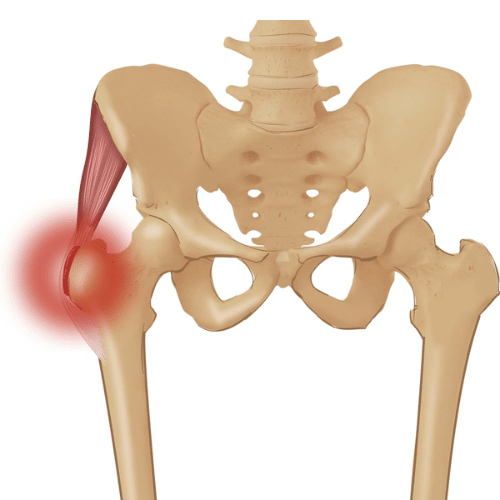
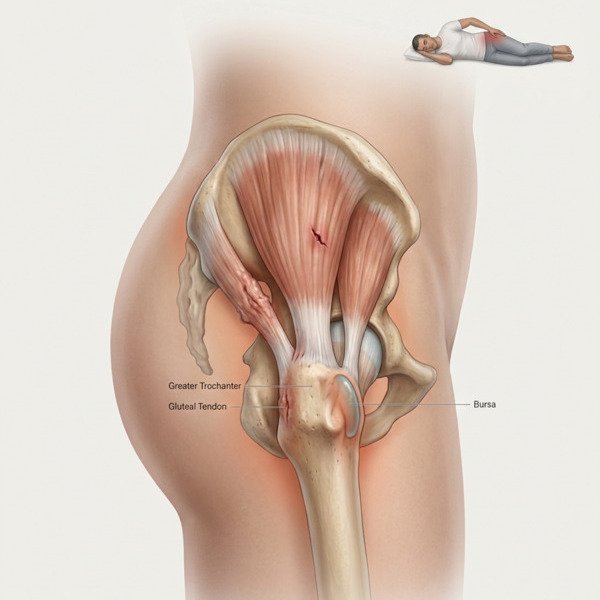
What Is Greater Trochanteric Pain Syndrome (GTPS)?
The greater trochanter is the knobby bone you can feel on the outside of your hip. It’s where several important muscles attach — the gluteus medius and minimus — which are responsible for stabilising your pelvis when you walk, run, or stand on one leg. Surrounding these tendons is a bursa, a small fluid-filled sac that cushions the area and reduces friction.
When something goes wrong in this area, it can cause significant pain and disability. The most common culprits are:
- Gluteal tendinopathy degeneration or micro-tearing of the gluteal tendons, often from repetitive overload
- Trochanteric bursitis inflammation of the bursa, which can occur alongside tendinopathy
- Gluteal tendon tears partial or complete tears, more common in older adults or after a fall
GTPS is more common in women, particularly those in their 40s and 50s, and in people who are overweight or have a history of lower back pain. It’s also seen in runners and athletes who do a lot of repetitive hip movement.
Symptoms of GTPS and Outer Hip Pain
Lateral hip pain has a distinct pattern that often makes it easy to recognise once you know what to look for. The symptoms tend to be activity-related and can vary in intensity from day to day.
Pain on the Outer Hip
Aching or sharp pain directly over the greater trochanter, often radiating down the outer thigh.
Pain When Lying on the Side
One of the most telling symptoms — being unable to lie on the affected side without pain, and sometimes waking up with pain at night.
Pain with Stairs or Walking
Discomfort when climbing stairs, walking on uneven ground, or standing for long periods.
Weakness or Giving Way
In more advanced cases, the hip may feel weak, and you might notice a limp or a feeling that the leg is giving way.
How Is Greater Trochanteric Pain Syndrome Diagnosed?
Getting the diagnosis right is essential, because the treatment for gluteal tendinopathy is quite different from the treatment for a tendon tear or bursitis. Dr. Raghavendra Kembhavi begins with a detailed history — when did the pain start, what makes it better or worse, and is there any history of injury or back pain? A physical examination then assesses the hip for tenderness over the greater trochanter, weakness in hip abduction, and pain with specific movements.
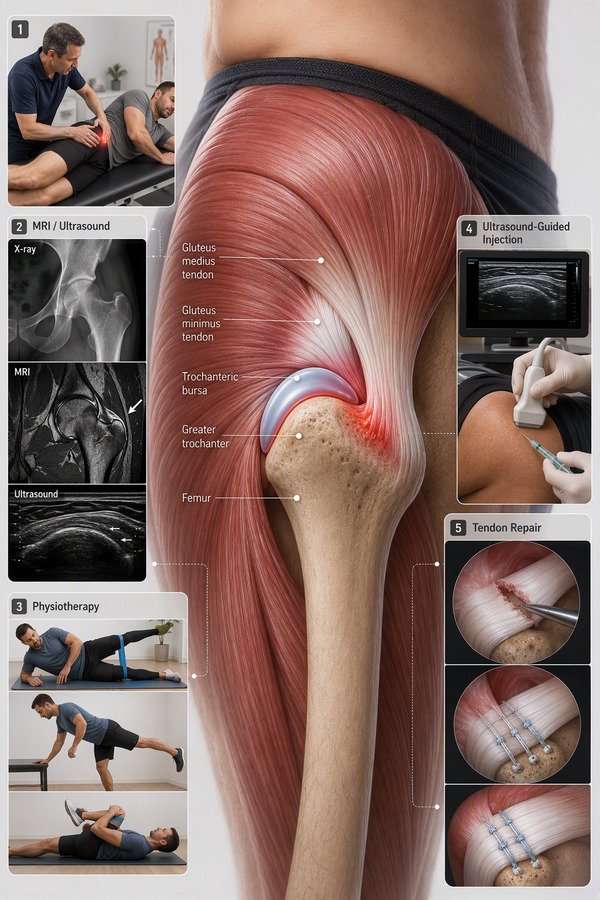
Imaging and Tests
X-rays are usually the first step. While they don’t show tendon or bursa problems directly, they help rule out other causes of hip pain such as arthritis or a fracture. An MRI or ultrasound is more useful for assessing the gluteal tendons and bursa. MRI can show tendon thickening, partial tears, or complete tears, while ultrasound allows a dynamic assessment and can guide injections if needed.
Treatment Approach
Most cases of GTPS improve with non-surgical treatment. The first step is usually a combination of:
- Activity modification — avoiding activities that aggravate the pain, such as running on hills or lying on the affected side
- Physiotherapy — a targeted programme of gluteal strengthening and stretching, which is the cornerstone of treatment
- Anti-inflammatory medications — short-term use to reduce pain and inflammation
- Weight management — if appropriate, as excess weight increases load on the hip
If conservative measures don’t provide relief, a corticosteroid injection into the trochanteric bursa or around the tendon can be very effective. This is often done under ultrasound guidance to ensure accuracy.
When Surgery Is Needed
If there’s a significant tendon tear — particularly a complete tear of the gluteus medius or minimus — surgery may be recommended. This is typically done arthroscopically or through a small open incision, repairing the torn tendon back to the bone. Dr. Kembhavi has extensive experience in these procedures and will discuss whether surgery is appropriate for your specific situation.
Why choose Dr. Raghavendra Kembhavi
Accurate diagnosis is key
Not all lateral hip pain is the same. Dr. Kembhavi takes the time to differentiate between tendinopathy, bursitis, and tendon tears — because each requires a different treatment approach. Getting the diagnosis right is the first step to getting you better.
A structured rehabilitation approach
Dr. Kembhavi works closely with physiotherapists to ensure you receive a comprehensive rehabilitation programme. Strengthening the gluteal muscles is essential for long-term recovery, and this is built into your treatment plan from the start.
Experience with complex hip conditions
Lateral hip pain can sometimes be a sign of a more complex underlying problem. Dr. Kembhavi’s background in hip preservation and arthroscopic surgery means he’s well-equipped to identify and treat even the most challenging cases.
Personalised care
Every patient is different, and so is every hip. Dr. Kembhavi takes the time to understand your specific situation — your goals, your lifestyle, and your concerns — and builds a treatment plan that’s tailored to you.