Best Arthroscopic Surgeon in Bangalore for Hip Arthroscopy Treatment
Dr. Raghavendra Kembhavi provides orthopaedic evaluation and treatment guidance for patients with hip joint conditions. If you are looking for the best arthroscopic surgeon in Bangalore, learn about hip arthroscopy, suitable treatment options and approaches to managing hip pain. Consult an experienced orthopaedic specialist to understand the most appropriate care for your condition.
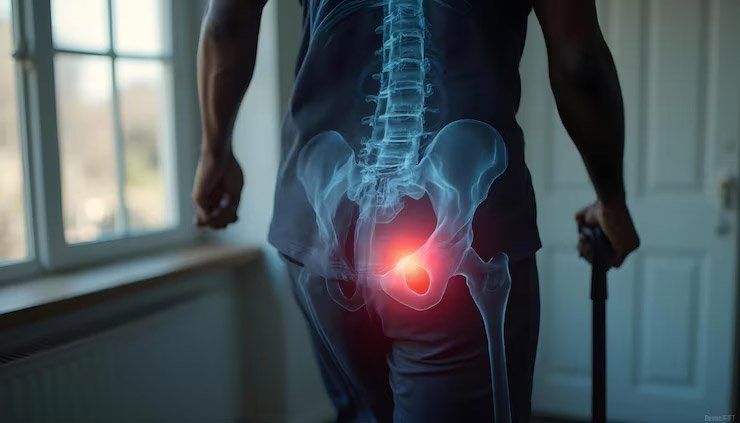
What hip arthroscopy is used for
Hip treatment is not one-size-fits-all. Dr. Raghavendra Kembhavi matches the treatment to the cause and severity of your hip condition, always starting with the least invasive option that is likely to work.
Femoroacetabular Impingement (FAI)
Abnormal contact between the ball and socket of the hip that causes pain and restricted movement.
Labral Tears
Damage to the cartilage rim (labrum) that helps stabilise and cushion the hip joint.
Cartilage Tears
Damage to the smooth cartilage covering the hip joint that can cause pain, stiffness and reduced movement.
Synovitis
Inflammation of the joint lining causing swelling, stiffness and pain.
Muscle Injuries
Strains or tears in the muscles around the hip causing pain, weakness and restricted movement.
Avascular Necrosis of Femoral Head
Reduced blood supply to the femoral head causing bone damage, pain and progressive joint problems.
Fracture Fixation
Surgical stabilisation of hip fractures using plates, screws or other fixation methods to support proper healing.
Loose Bodies
Fragments of bone or cartilage within the hip joint that can cause catching, locking and pain.
Early Arthritis
Initial cartilage wear in the hip joint causing pain, stiffness and reduced mobility. Lateral Hip Pain (GTPS) — Pain around the outer side of the hip commonly caused by irritation of the tendons or surrounding tissues.
Piriformis Syndrome
Irritation or compression of the sciatic nerve by the piriformis muscle causing pain in the buttock and leg.
Deep Gluteal Syndrome
Compression or irritation of the sciatic nerve within the deep gluteal region causing buttock and leg pain.
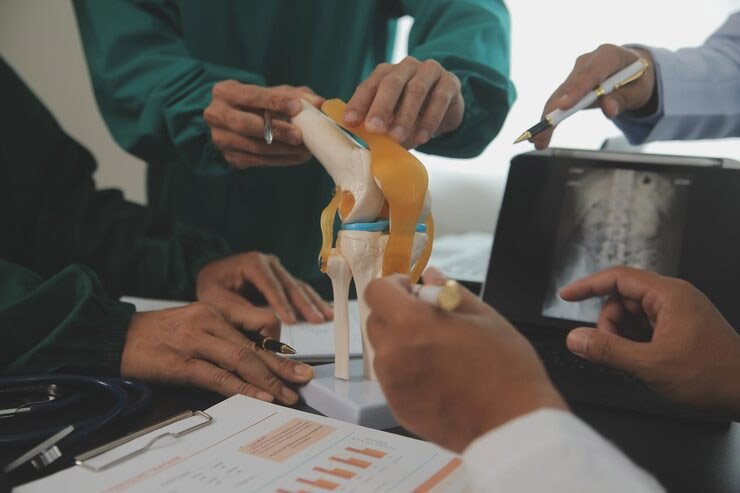
Hip Arthroscopic Surgeon in Bangalore for Advanced Hip Joint Care
Hip arthroscopy is keyhole surgery performed inside the hip joint. Dr. Raghavendra Kembhavi inserts a thin camera (arthroscope) through a small incision to view the joint on a monitor in real time, then uses narrow surgical instruments through one or two additional small incisions to repair the damage found — all without the large incision an open hip operation would require.
Because the joint is viewed directly and magnified on screen, arthroscopy allows precise diagnosis and treatment of problems that are difficult to fully assess on imaging alone.
Less disruption, faster recovery
Open hip surgery requires a larger incision and more disruption to the muscles surrounding the joint. Hip arthroscopy’s small-incision approach means less bleeding, less post-operative pain, a lower infection risk, and a meaningfully faster return to walking and daily activity.
For the right diagnosis — structural problems like impingement or a torn labrum rather than advanced arthritis — arthroscopy achieves the surgical goal while preserving the patient’s own natural hip joint.
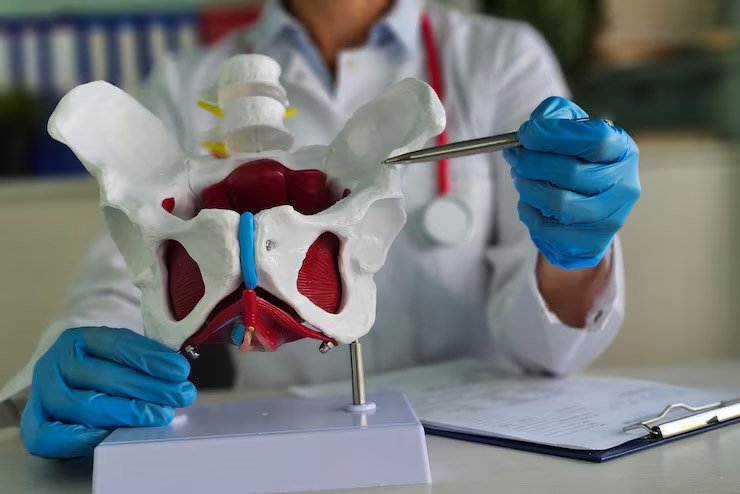
How hip arthroscopy is performed
Step 1
Anaesthesia & Positioning
The procedure is performed under general or regional anaesthesia, with the patient positioned to allow safe joint access.
Step 2
Joint Distraction
Gentle traction creates space within the hip joint, allowing instruments to move safely without damaging surrounding cartilage.
Step 3
Portal Placement
2–3 small incisions are made for the arthroscope (camera) and surgical instruments.
Step 4
Diagnosis & Treatment
The joint is examined directly on screen, and impingement, labral tears or loose bodies are treated as found.
Step 5
Closure & Recovery Room
Small incisions are closed with a stitch or adhesive strip, and the patient is monitored before discharge or overnight observation.
Hip arthroscopy vs. open hip surgery
| Factor | Hip Arthroscopy | Open Hip Surgery |
|---|---|---|
| Incision size | 2–3 incisions, 5–8mm each | One larger incision (several cm) |
| Muscle disruption | Minimal | Greater |
| Hospital stay | Day-care or 1 night | Several days |
| Time on crutches | 1–2 weeks typically | Longer, condition-dependent |
| Return to sport | ~3–4 months | Often longer |
Who benefits most from hip arthroscopy
Good candidates typically have:
- Hip pain from impingement (FAI) or a labral tear confirmed on imaging
- Pain that hasn’t improved with physiotherapy or medication
- Mechanical symptoms — catching, locking or clicking in the hip
- Minimal to no significant hip arthritis
- Good overall joint space on imaging
Good candidates typically have:
A consultation and imaging review with Dr. Raghavendra Kembhavi will confirm whether hip arthroscopy — or an alternative treatment — is right for you.
What to expect after hip arthroscopy
Days 1–3
Rest, pain management, crutch-assisted walking begins.
Week 1–2
Continued crutch use; physiotherapy begins to restore range of motion.
Week 3–4
Progressive weight-bearing; light daily activities resume.
Month 3–4
Return to sport and high-impact activity, guided by rehabilitation progress.
Fellowship-trained, sports medicine focused
Dr. Raghavendra Kembhavi is a fellowship-trained Orthopaedic Surgeon and Sports Medicine Specialist offering minimally invasive arthroscopic care for hip, knee and shoulder conditions in Bangalore.

10000+
Successful Patient Consultations

3000+
Orthopaedic & Sports Injury Treatments

2500+
Arthroscopic & Joint ProceduresPatient Satisfaction

17+
Years of Trusted Experience