Hip Replacement Surgeon in Bangalore for Advanced Hip Joint Care
Hip pain and joint damage can affect walking, mobility and everyday activities. Dr. Raghavendra Kembhavi provides orthopaedic evaluation for patients with hip joint conditions and helps them understand suitable treatment options, including hip replacement surgery when clinically appropriate. If you are looking for a hip replacement surgeon in Bangalore, consult the clinic to discuss your symptoms, diagnosis and treatment options.
What Is Hip Replacement Surgery?
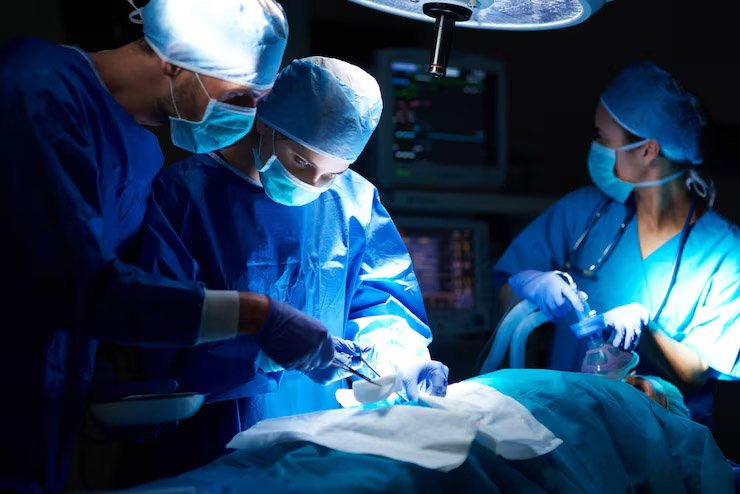
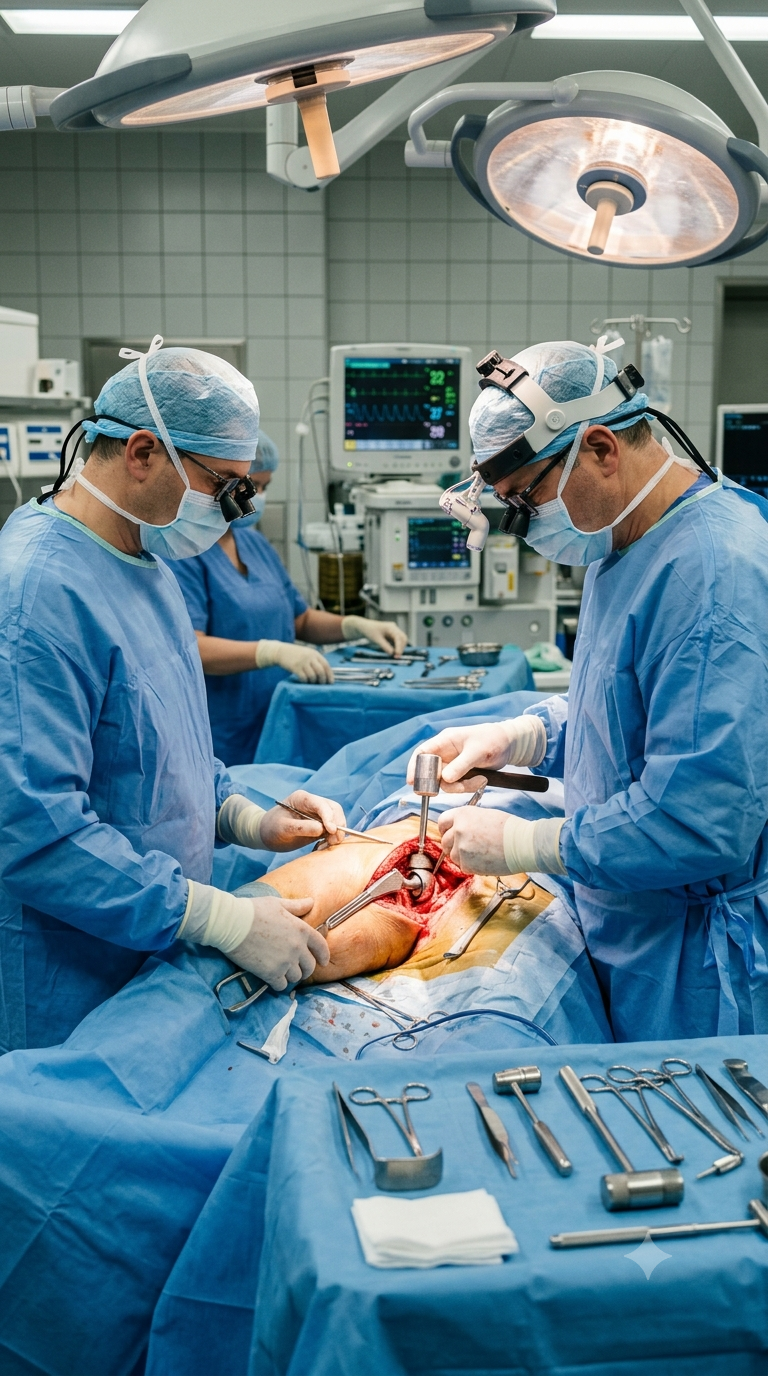
Hip replacement surgery — also called total hip arthroplasty — is a procedure in which the damaged cartilage and bone of the hip joint are removed and replaced with precisely engineered prosthetic components. At Sports Orthopedic Clinic in Bangalore, Dr. Raghavendra Kembhavi performs hip replacement using the anterior (front) approach with optional robotic assistance, offering patients a faster, more accurate, and less traumatic surgical experience than traditional techniques.
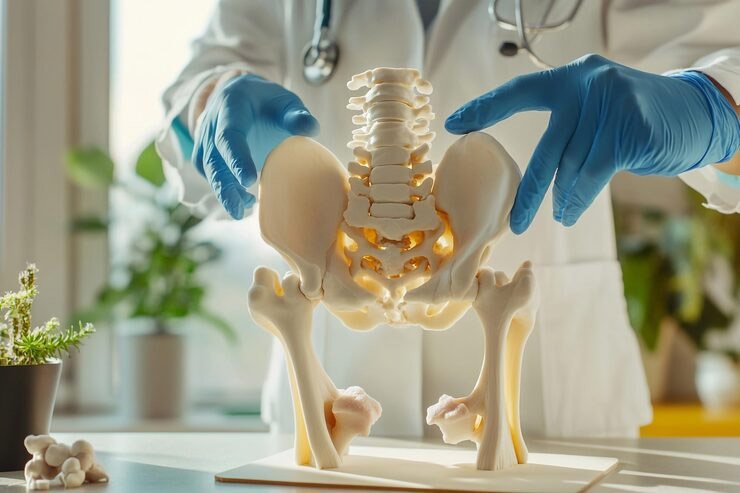
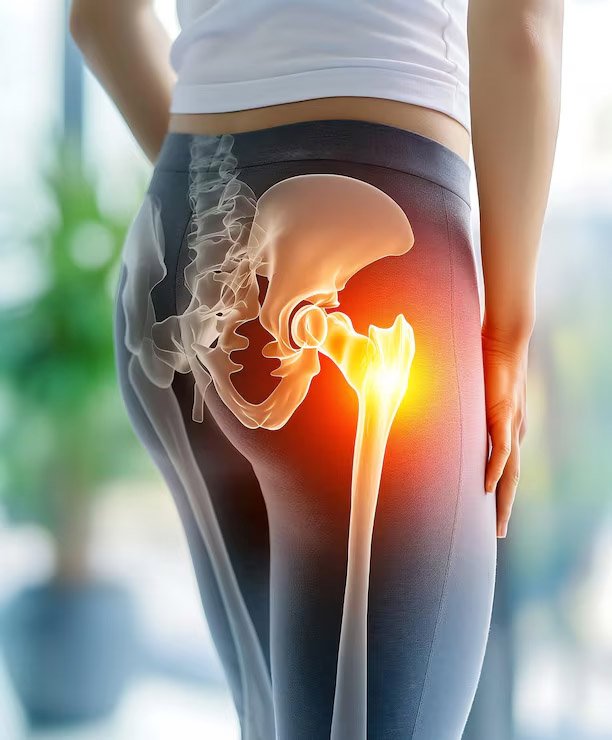
The hip is a ball-and-socket joint. In a healthy hip, smooth cartilage cushions the ball (femoral head) and socket (acetabulum), allowing fluid, pain-free movement. When this cartilage wears away due to arthritis, injury or disease, bone grinds against bone — causing severe pain, stiffness and dramatically reduced quality of life. When conservative treatments such as physiotherapy, medications and injections no longer provide adequate relief, hip replacement surgery offers a highly effective, long-lasting solution.
Types of Hip Replacement Surgery Offered in Bangalore
Dr. Raghavendra offers a range of hip replacement solutions tailored to each patient’s age, anatomy, activity level and diagnosis:
Total Hip Replacement (THR)
The entire hip joint — both the femoral head and acetabular socket — is replaced with a prosthetic implant system. The gold standard for advanced arthritis and joint degeneration.
Anterior Approach Hip Replacement
The hip is accessed from the front of the body, avoiding cutting through the large gluteal muscles. Results in less pain, faster recovery and lower dislocation risk than the posterior approach.
Robotic-Assisted Hip Replacement
A robotic arm guided by pre-operative CT data helps Dr. Raghavendra position the implant with sub-millimetre precision — improving biomechanics and long-term implant survival.
Hip Hemiarthroplasty
Only the femoral head (ball) is replaced, while the natural acetabular socket is preserved. Most commonly performed for femoral neck fractures in elderly patients.
Who Needs Hip Replacement Surgery?
Dr. Raghavendra recommends hip replacement surgery in Bangalore for patients who present with the following conditions and have not responded adequately to non-surgical management:
- Severe hip osteoarthritis with bone-on-bone contact confirmed on X-ray
- Constant hip or groin pain significantly limiting daily activities
- Avascular necrosis (AVN) of the femoral head
- Hip pain that wakes you at night or prevents restful sleep
- Femoral neck fracture or failed hip fracture fixation
- Rheumatoid or inflammatory arthritis of the hip
- Stiffness preventing bending, shoe-tying or getting in/out of a car
- Hip dysplasia causing early joint degeneration
- Failure to respond to physiotherapy, medication or injections over 3–6 months
- Significantly reduced walking distance due to hip pain
How Hip Replacement Surgery Is Performed
Here is a step-by-step overview of what patients can expect during hip replacement surgery at Sports Orthopedic Clinic, Bangalore:
Pre-operative planning
A CT scan and X-rays are taken to create a precise 3D digital model of the patient’s hip. For robotic cases, this data is uploaded to the robotic system so the surgeon can plan implant size, angle and position before entering the operating theatre.
Anaesthesia
Surgery is performed under spinal or general anaesthesia. The choice is discussed with the patient and anaesthesiologist based on medical history and preference.
Anterior approach incision
A small incision is made at the front of the hip. Unlike the traditional posterior approach, no major muscles are cut — they are gently moved aside to expose the joint, preserving muscle integrity and reducing post-operative pain.
Joint removal & implant placement
The damaged femoral head is carefully removed. The acetabular socket is prepared and a metal cup is precisely seated. The femoral stem with an artificial ball is then implanted. Robotic guidance confirms optimal positioning in real time before final fixation.
Leg length & stability check
Leg length equality and hip stability are verified through movement testing before closing. The robotic system provides instant feedback to confirm that planned parameters are achieved.
Closure & early mobilisation
The incision is closed with absorbable sutures. Physiotherapy begins on the day of or the day after surgery. Most patients take their first steps within 24 hours and are discharged within 2–3 days.
Hip Replacement Surgery at a Glance
Week 1
Duration
60 – 90 mins
Week 1
Hospital Stay
2 – 3 days
Week 1
First Walk
Within 24 hours
Week 12
Full Recovery
3 – 6 months
20 Years
Implant Life
20 – 25+ years
Anterior vs Posterior Hip Replacement: Why It Matters
Dr. Raghavendra Kembhavi uses the anterior (front) approach as his primary technique for hip replacement. Here is how it compares to the traditional posterior approach:
| Factor | Anterior Approach (Dr. Raghavendra) | Posterior Approach (Traditional) |
|---|---|---|
| Muscle disruption | Muscles spread, not cut | Major muscles cut & repaired |
| Post-op pain | Significantly less | More post-operative pain |
| Dislocation risk | Very low (muscles intact) | Higher — activity restrictions needed |
| Time to walk | Within 24 hours | 1–3 days typically |
| Hospital stay | 2–3 days | 3–5 days |
| Activity restrictions | Minimal post-op restrictions | 6–12 weeks of hip precautions |
| Recovery time | 3–6 months to full activity | 6–12 months |
| Scar visibility | Front of hip (less visible) | Posterior buttock area |
Benefits of Hip Replacement Surgery at Sports Orthopedic Clinic
Fellowship-trained surgeon
Specialist training in hip arthroscopy & joint replacement from premier institutions.
Robotic precision
CT-guided robotic arm ensures implant is placed with sub-millimetre accuracy every time.
No muscle cutting
Anterior approach preserves all major muscles — less pain, no hip precautions needed.
Faster return to life
Most patients walk within 24 hours and are home in 2–3 days.
Personalised care
Every patient gets a tailored implant selection, surgical plan and rehabilitation programme.
Long-lasting results
Modern implants last 20–25+ years, and most patients experience pain-free life for decades.
Recovery Timeline After Hip Replacement Surgery in Bangalore
Recovery after anterior approach hip replacement with Dr. Raghavendra is significantly faster than traditional methods. Here is what to expect:
Days 0–1
Surgery completed; physiotherapy begins; patient stands and takes first steps with walker support
Day 2 – 3
Discharged home; walking with walker or cane; pain managed with oral medication
Week 1 – 2
Wound check; short walks progressively increased; gentle hip range-of-motion exercises
Week 6
Follow-up X-ray; most return to desk work; physiotherapy progresses to strengthening
Month 3
Return to moderate exercise, swimming, cycling; significant pain relief achieved
Month 6+
Full return to active lifestyle including low-impact sports; hip feels natural and pain-free
Fellowship-trained, sports medicine focused
Dr. Raghavendra Kembhavi is a fellowship-trained Orthopaedic Surgeon and Sports Medicine Specialist offering minimally invasive arthroscopic care for hip, knee and shoulder conditions in Bangalore.

10000+
Successful Patient Consultations

3000+
Orthopaedic & Sports Injury Treatments

2500+
Arthroscopic & Joint Procedures

17+
Years of Trusted Experience