Hip Treatment in Bangalore for Hip Pain and Joint Conditions
Dr. Raghavendra Kembhavi is an orthopaedic surgeon with specialised training in hip arthroscopy and joint replacement. He evaluates hip pain, hip joint disorders and conditions that affect movement and daily activities. Depending on the diagnosis, treatment options may include non-surgical management, hip arthroscopy or hip replacement. Consult Dr. Kembhavi to understand the treatment approach suitable for your condition.
17+
Years of Experience
3000+
Orthopaedic & Sports Injury Treatments
2500+
Arthroscopic & Joint Procedures
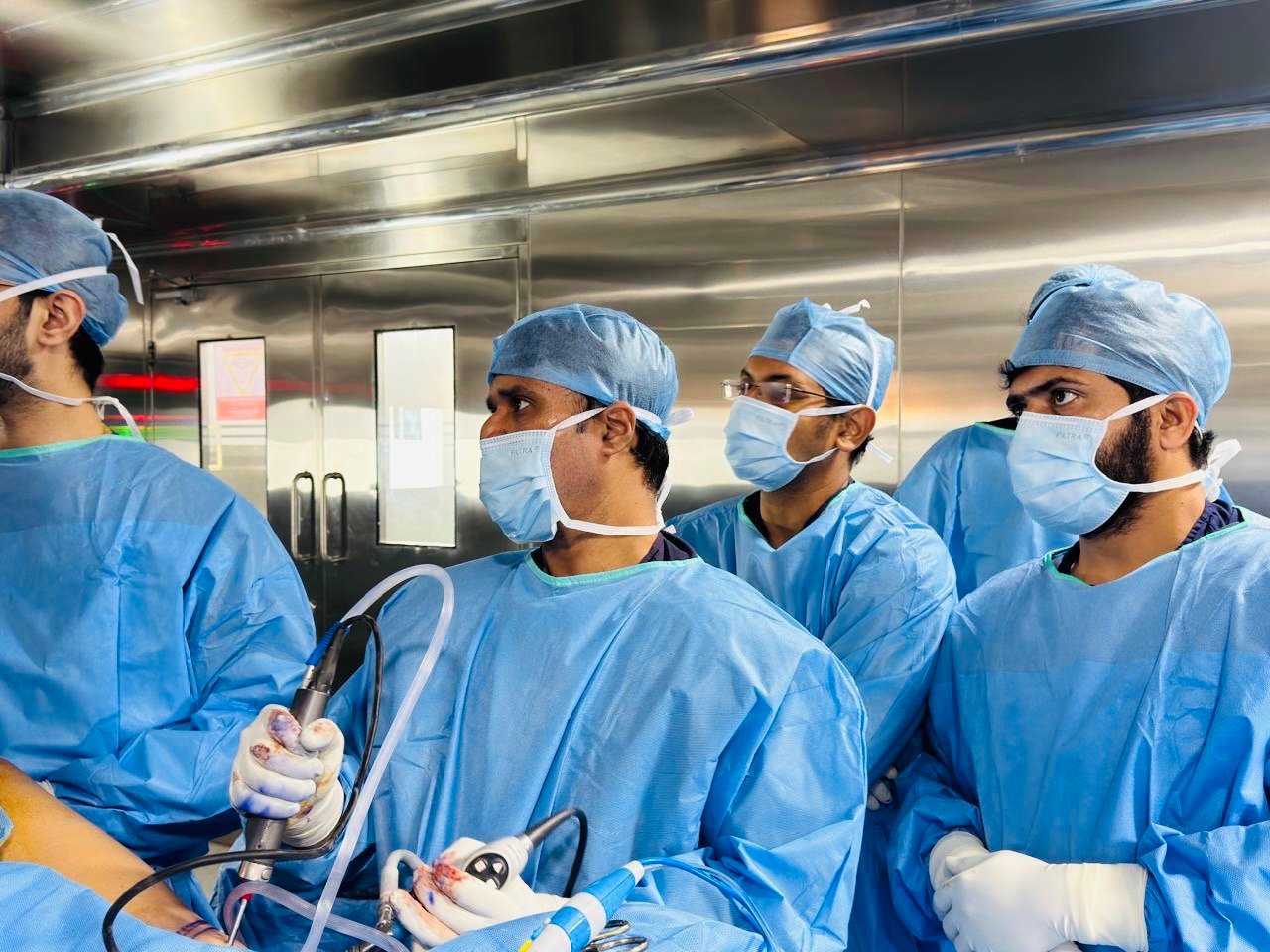
Three pathways to a pain-free hip
Hip treatment is not one-size-fits-all. Dr. Raghavendra Kembhavi matches the treatment to the cause and severity of your hip condition, always starting with the least invasive option that is likely to work.
Hip Arthroscopy
Minimally invasive keyhole surgery to diagnose and repair structural problems inside the hip joint.
- Small camera-guided incisions
- Treats labral tears & impingement (FAI)
- Preserves the natural joint
- Faster recovery than open surgery
Hip Replacement Surgery
Replaces a severely damaged hip joint with an artificial implant to relieve pain and restore mobility.
- Total or partial hip replacement
- For advanced arthritis & joint damage
- High long-term success rate
- Structured rehabilitation programme
Non-Surgical Hip Treatment
The first-line approach for early or mild hip pain — aims to relieve pain and improve function without surgery.
- Physiotherapy & guided exercise
- Anti-inflammatory medication
- Activity modification
- PRP & injection therapies where appropriate
Hip Pain Treatment in Bangalore by an Experienced Orthopaedic Surgeon
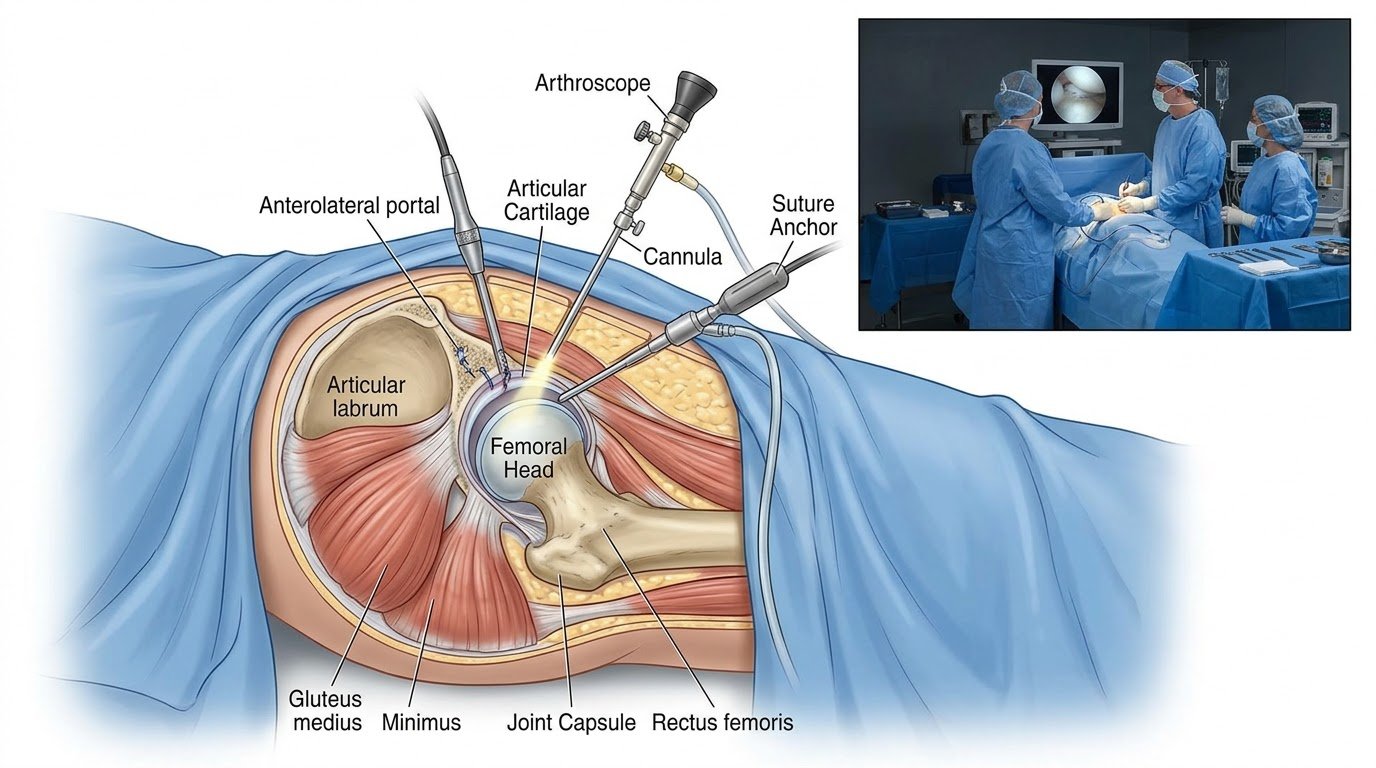
Hip arthroscopy is a minimally invasive surgical procedure in which a small camera (arthroscope) and specialised instruments are inserted through a few small incisions around the hip. It allows Dr. Raghavendra Kembhavi to directly view and treat problems inside the joint without the larger incision an open surgery would require.
Commonly treated with hip arthroscopy
- Femoroacetabular impingement (FAI) — abnormal contact between the hip bones
- Labral tears — damage to the cartilage rim that stabilises the joint
- Loose bodies within the joint
- Early-stage cartilage damage
- Snapping hip syndrome and related soft-tissue conditions
What is hip replacement surgery?
Hip replacement surgery removes the damaged surfaces of the hip joint and replaces them with an artificial implant made of metal, ceramic or high-grade plastic components. It is one of the most successful procedures in orthopaedic surgery for relieving pain and restoring mobility in a severely worn or damaged hip.
Commonly treated with hip replacement surgery
- Advanced hip osteoarthritis
- Avascular necrosis (loss of blood supply to the hip bone)
- Severe hip fractures, particularly in older adults
- Rheumatoid arthritis affecting the hip joint
- Failed previous hip surgery
- Recovery: Most patients walk with support within a day of surgery, are discharged within a few days, and return to most daily activities within 6–12 weeks.

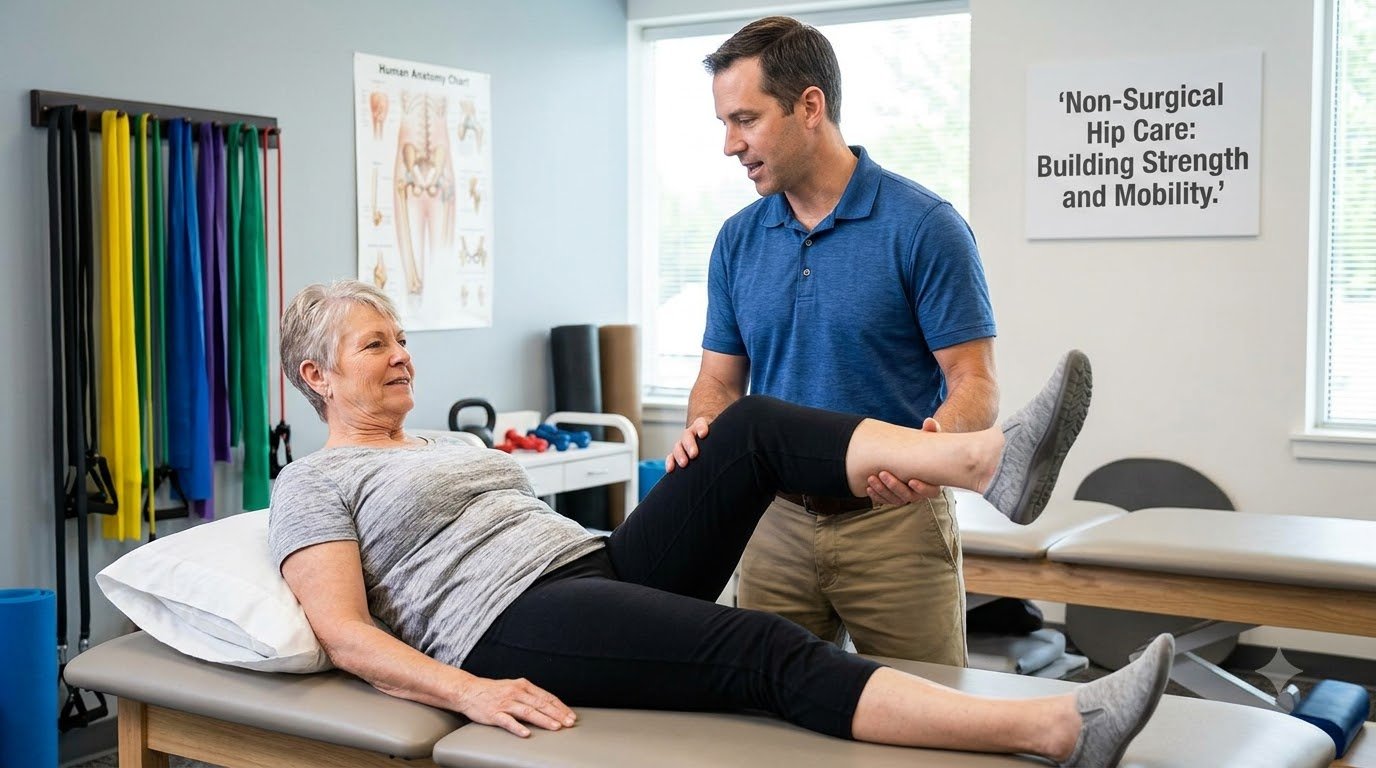
What is non-surgical hip treatment?
Non-surgical hip treatment uses conservative, evidence-based methods to reduce hip pain and improve joint function without an operation. It is the recommended starting point for most hip conditions, and for many patients it provides lasting relief without ever needing surgery.
What non-surgical treatment may include
- Physiotherapy and targeted strengthening exercises
- Activity and lifestyle modification
- Anti-inflammatory and pain-relief medication
- Corticosteroid or viscosupplementation injections
- Regenerative therapies such as PRP, where appropriate
- Weight management to reduce joint load
- Best for: Early to moderate hip arthritis, muscle strains, bursitis, and as first-line care before considering surgery.
Hip arthroscopy vs. hip replacement vs. non-surgical treatment
| Factor | Non-Surgical | Hip Arthroscopy | Hip Replacement |
|---|---|---|---|
| Best for | Early/mild hip pain, bursitis, muscle strain | Labral tears, impingement (FAI) | Advanced arthritis, severe joint damage |
| Invasiveness | None | Minimally invasive (keyhole) | Major surgery |
| Hospital stay | Not applicable | Usually day-care or 1 night | Typically 3–5 days |
| Typical recovery | Ongoing, condition-dependent | 2–4 weeks to light activity | 6–12 weeks to daily activity |
| Joint preserved? | ✓ Yes | ✓ Yes | ✕ No (replaced) |
Hip conditions we diagnose and treat
Hip Osteoarthritis
Femoroacetabular Impingement (FAI)
Labral Tears
Avascular Necrosis
Hip Fractures
Hip Bursitis
Sports-Related Hip Injuries
Hip Dysplasia
Fellowship-trained hip care, backed by results
Dr. Raghavendra Kembhavi is a fellowship-trained Orthopaedic Surgeon and Sports Medicine Specialist dedicated to comprehensive care for hip, knee, shoulder and sports-related conditions, offering advanced diagnosis and both surgical and non-surgical treatment.

10000+
Successful Patient Consultations

3000+
Orthopaedic & Sports Injury Treatments

2500+
Arthroscopic & Joint Procedures

17+
Years of Trusted Experience
From hip pain to full mobility
Step 1
Initial Assessment & Consultation
A detailed evaluation of your hip pain, symptoms, and mobility to understand the underlying cause.
Step 2
Accurate Diagnosis & Imaging
Clinical examination supported by imaging to confirm the diagnosis and identify the affected structures.
Step 3
Personalised Treatment Plan
A recommendation of non-surgical care, hip arthroscopy, or hip replacement — matched to your condition and goals.
Step 4
Recovery & Rehabilitation
Structured rehabilitation and follow-up to help you return to daily activities, work, or sport.