Cartilage Repair Surgery in Bangalore for Hip Joint Injuries
Cartilage damage in the hip joint can cause pain, stiffness and difficulty with movement. Cartilage repair surgery may be considered in selected cases depending on the type and extent of damage and the overall condition of the joint. Dr. Raghavendra Kembhavi provides orthopaedic evaluation for hip cartilage injuries and discusses appropriate treatment options based on each patient’s diagnosis. If you are looking for cartilage repair surgery in Bangalore, consult the clinic to understand the available approaches.
At our clinic in Bangalore, Dr. Raghavendra Kembhavi focuses on joint preservation and cartilage restoration procedures designed to help you avoid or delay joint replacement surgery. The goal isn’t just to manage your pain — it’s to restore the health of your joint so you can get back to the activities you love.
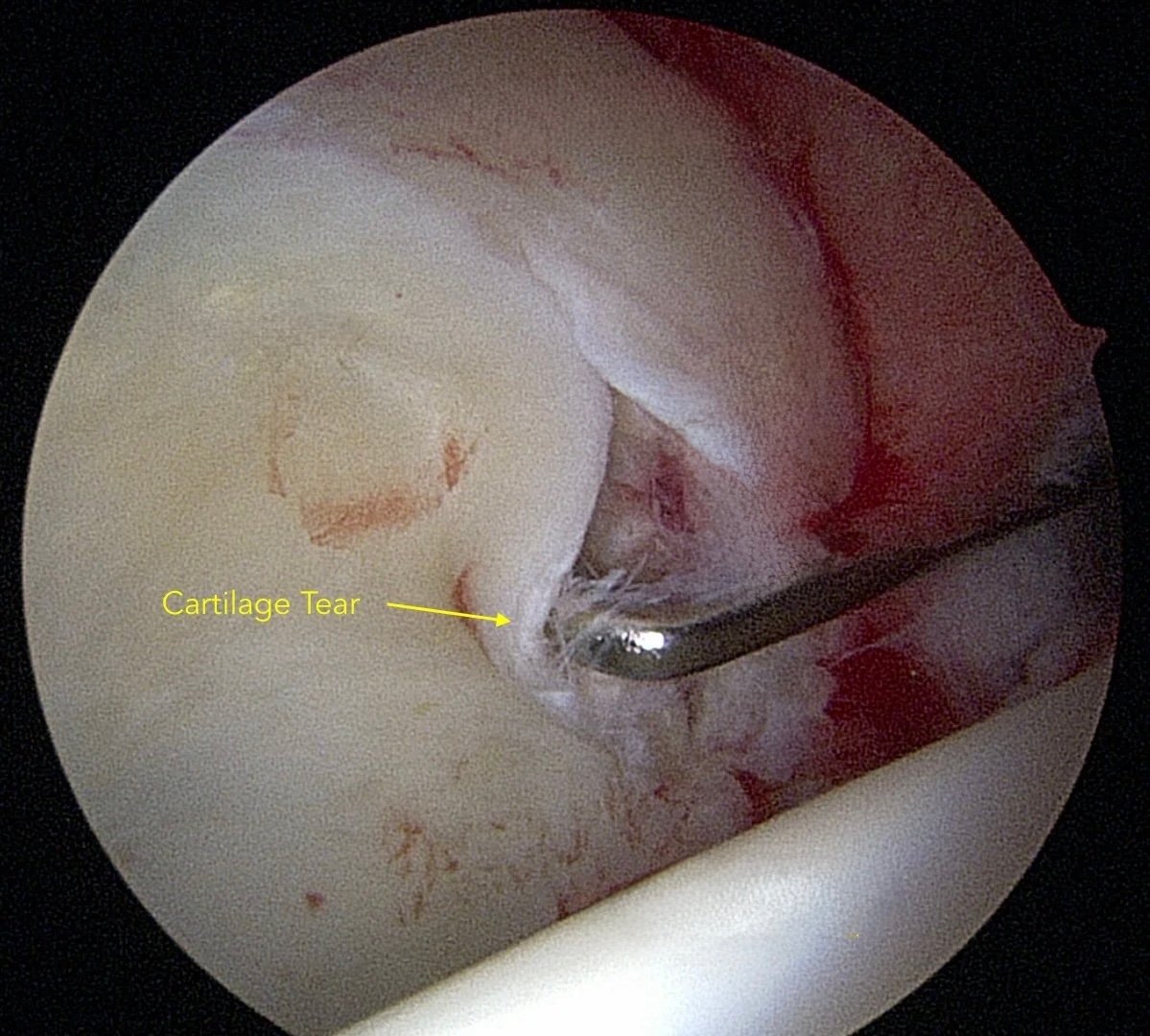
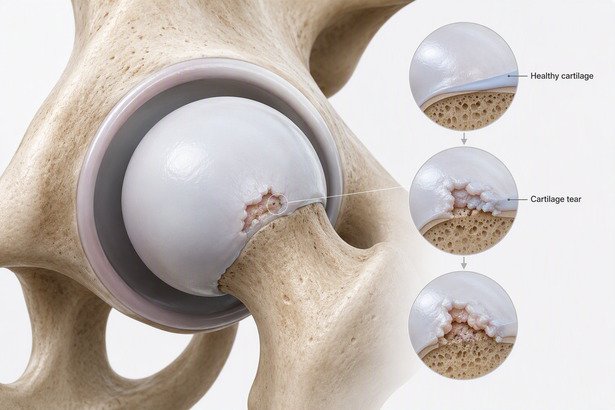
Cartilage tears can happen in two main ways. There’s the acute injury — a sudden twist, a bad landing, or a direct blow that damages the cartilage surface. Then there’s the gradual wear and tear that happens over years, often related to repetitive use, alignment issues, or simply the passage of time.
In the hip, cartilage damage is often linked to conditions like femoroacetabular impingement (FAI) or labral tears, where abnormal mechanics cause the cartilage to break down over time. In the knee, it can result from sports injuries, previous ligament damage, or degenerative changes.
The challenge with cartilage is that it doesn’t have a direct blood supply, so it can’t heal itself the way other tissues do. This is why even small cartilage defects can progressively worsen if left untreated, eventually leading to osteoarthritis and the need for joint replacement.
Causes and Symptoms of Hip Cartilage Damage
Cartilage damage doesn’t always cause immediate, obvious symptoms. Many people describe a gradual onset of discomfort that they initially dismiss as a minor strain. Common signs include:
Persistent Joint Pain
A deep, aching pain that worsens with activity and may improve with rest. Often felt along the joint line.
Swelling and Stiffness
Recurring swelling in the joint, especially after activity, along with a feeling of tightness or reduced flexibility.
Clicking, Catching or Locking
A sensation of grinding or popping during movement. In more severe cases, the joint may actually lock or give way.
Difficulty with Stairs or Squatting
Pain that intensifies when going up or down stairs, kneeling, or squatting — movements that load the joint.
Diagnosis of Hip Cartilage Injuries
Cartilage injuries can be difficult to diagnose because the symptoms often overlap with other joint conditions. Dr. Raghavendra Kembhavi begins with a detailed clinical history and physical examination, assessing your joint’s range of motion, stability, and areas of tenderness.
Imaging Studies
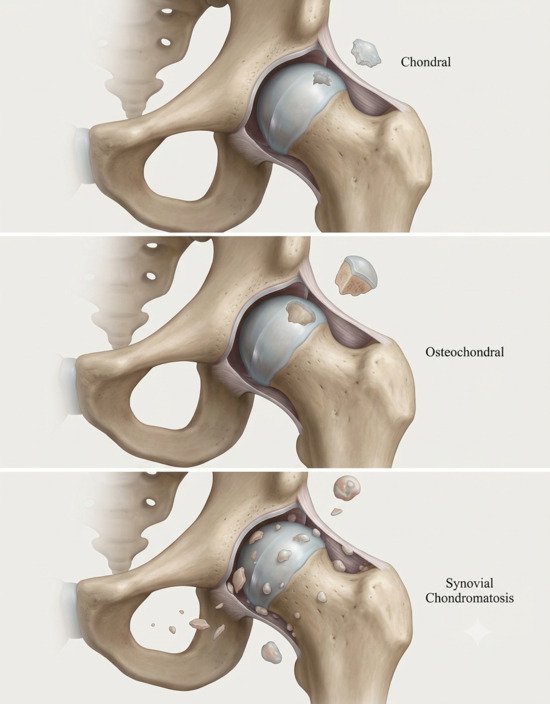
While X-rays are useful for assessing joint alignment and space, they don’t show cartilage directly. An MRI is the imaging study of choice for visualising cartilage damage, identifying the size and location of the defect, and assessing the health of surrounding structures. In some cases, a specialised MRI with contrast dye (MR arthrography) may be used to get a clearer picture of the cartilage surface.
Treatment Approach
Treatment for cartilage damage depends on several factors: the size and location of the defect, your age, your activity level, and whether there are other structural problems contributing to the damage. For smaller defects or early degeneration, non-surgical measures like physical therapy, activity modification, and anti-inflammatory medications may be enough to manage symptoms.
Cartilage Restoration Procedures
For larger defects or when symptoms persist despite conservative care, surgical options are available. The choice of procedure depends on the specific characteristics of your cartilage damage. Techniques range from microfracture — which creates small holes in the bone to stimulate a healing response — to more advanced cell-based procedures like autologous chondrocyte implantation (ACI), where your own cartilage cells are harvested, grown in a lab, and re-implanted into the defect. Dr. Kembhavi has extensive experience in these joint preservation techniques and will discuss which approach is most suitable for your individual situation.
Recovery After Cartilage Repair Surgery
Recovery from cartilage surgery is a gradual process that requires patience and a structured rehabilitation programme. Unlike some other procedures, you won’t be able to rush this — the cartilage needs time to mature and integrate with the surrounding tissue.
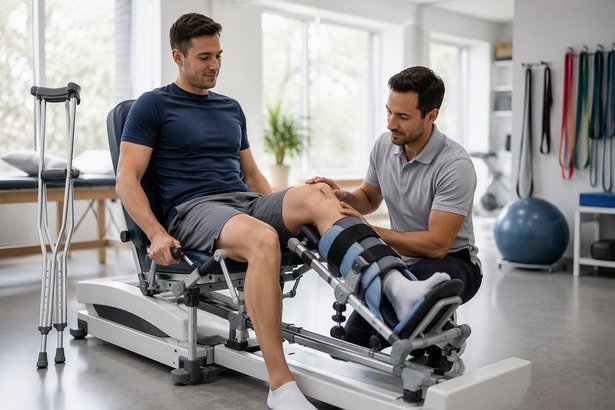
The early phase focuses on protecting the repair. You’ll likely use crutches and may need a continuous passive motion (CPM) machine to gently move the joint without stressing the new tissue. Physical therapy begins early, with a progressive programme that advances from gentle range-of-motion exercises to strengthening and eventually functional training. Full recovery can take several months, and for some procedures, up to a year or more before you can return to high-impact activities.