Acromio-Clavicular (AC) Joint Arthritis Treatment in Bangalore
You feel it when you reach across your body to put on a seatbelt, or when you try to sleep on that shoulder at night. There’s a sharp, pinpoint pain right at the top of your shoulder — not the deep ache of a rotator cuff problem, but something more specific and localised.
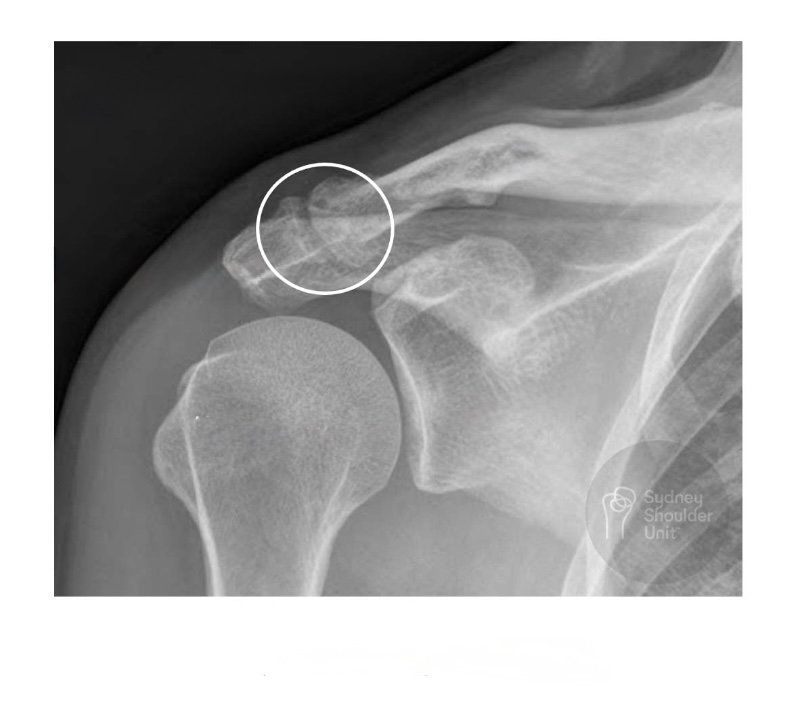
This is often how AC joint arthritis presents. The acromioclavicular joint is the small joint where your collarbone meets the top of your shoulder blade. It’s a hard-working joint that takes a lot of load during overhead activities, and over time — or after an injury — the cartilage inside it can wear down, leading to pain, stiffness, and that familiar catching sensation when you move your arm across your body.
It’s a common cause of shoulder pain, particularly in people over 50, but it can also affect younger individuals after a fall or sports injury. At our clinic in Bangalore, Dr. Raghavendra Kembhavi takes a targeted approach to diagnosing and treating AC joint arthritis — because pinpointing the exact source of shoulder pain is the key to getting you the right treatment.
What causes Acromio-Clavicular (AC) arthritis?
The AC joint is a small, superficial joint — you can actually feel it as a bony bump at the very top of your shoulder. It’s vulnerable to both acute injuries and the gradual wear and tear of daily life.
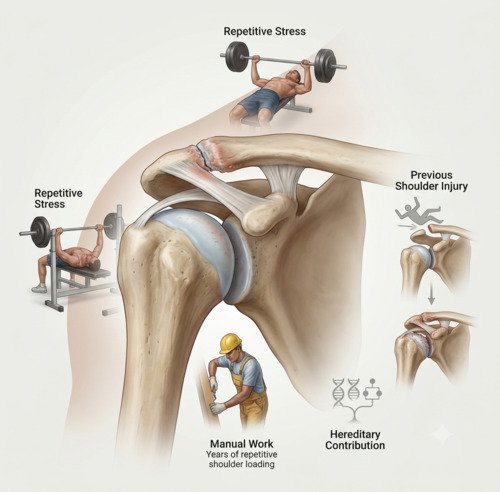
The most common cause is osteoarthritis — the cartilage inside the joint simply wears down over decades, much like knee or hip arthritis. This is more common in people over 50, and particularly in those who’ve done years of manual work, weightlifting, or repetitive overhead activities.
But it’s not just about age. A previous injury to the shoulder — a fall directly onto the shoulder, a separated shoulder, or a fracture around the joint — can lead to post-traumatic arthritis years later, even in younger people. The joint doesn’t forget. And in some cases, there’s a hereditary component, where family history plays a role.
Signs and symptoms
AC joint arthritis has a fairly distinctive pattern. The pain is usually well-localised — you can often put a finger right on the spot — and it’s brought on by specific movements.
Pinpoint pain at the top of the shoulder
A sharp, localised pain directly over the AC joint — the bony bump where your collarbone meets your shoulder blade.
Pain reaching across your body
Movements like putting on a seatbelt, reaching for the opposite shoulder, or hugging someone often bring on the pain.
Pain lying on the affected side
Night pain is common — you may find it impossible to sleep on that shoulder, or you wake up with a dull ache.
Clicking or grinding sensation
Some people describe a grinding or clicking feeling when they move the shoulder, especially first thing in the morning.
Diagnosis
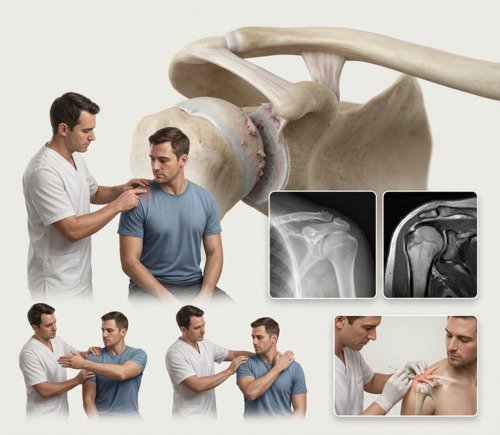
Diagnosing AC joint arthritis is usually straightforward once a specialist knows what to look for. The condition has a characteristic “pointing sign” — patients instinctively point a single finger directly at the AC joint when asked where it hurts, rather than grabbing the whole shoulder area.
Clinical examination
Dr. Kembhavi will examine the shoulder, looking for localised tenderness over the AC joint. Simple provocative tests like the cross-body adduction test (bringing your arm across your chest) and the scarf test (reaching for the opposite shoulder) often reproduce the pain. These tests help confirm that the AC joint — not the rotator cuff or other structures — is the primary source of your symptoms.
Imaging
X-rays are the standard first investigation. They can show narrowing of the joint space, bone spurs, and other changes typical of arthritis. In some cases, an MRI may be ordered to rule out other shoulder problems, particularly if there’s suspicion of a rotator cuff tear alongside the AC joint issue.
Diagnostic injection
Sometimes a small injection of local anaesthetic into the AC joint is used diagnostically. If your pain temporarily disappears after the injection, it confirms that the AC joint is the culprit. This can be a very useful step before planning treatment.
How AC joint arthritis is treated
Step 1
Activity Modification
Avoiding movements that bring the arm across the body and heavy overhead lifting. Most cases settle with these simple changes alone.
Step 2
Pain Management
Anti-inflammatory medications (NSAIDs) to reduce pain and inflammation. Ice packs can help during flare-ups.
Step 3
Steroid Injection
A corticosteroid injection into the AC joint can provide significant pain relief. It’s often done under image guidance for accuracy.
Step 4
Surgical Consultation
If symptoms persist despite six months of appropriate non-surgical treatment, surgery may be discussed. This is typically a day-care procedure.
Step 5
AC Joint Resection
A small portion (5–6mm) of the outer end of the collarbone is removed, creating space so the bones no longer rub together.
Step 6
Rehabilitation
Physiotherapy to restore range of motion and strength, with a gradual return to activity over 6–12 weeks.
AC joint resection vs. non-surgical treatment
| Factor | AC Joint Resection | Non-Surgical Treatment |
|---|---|---|
| Best for | Persistent pain after 6+ months of failed conservative care | Mild to moderate symptoms, first-line treatment |
| Pain relief | 90% of patients pain-free within 3 months | Often effective, but symptoms may recur with activity |
| Recovery time | Desk work 1–2 weeks; full recovery 6–12 weeks | No downtime; symptoms settle over weeks to months |
| Joint preservation | Small portion of clavicle removed; joint no longer articulates | Joint preserved; relies on symptom management |
When is surgery required for AC joint arthritis?
Surgery is not the first option — and for most people, it won’t be necessary at all. Many cases of AC joint arthritis settle with activity modification and simple pain relief. The joint has a tendency to “burn out” over time, meaning symptoms often improve after a period of flare-up.
However, surgery may be recommended if you’ve tried appropriate non-surgical treatment for at least six months and still have persistent, disabling pain that affects your sleep, work, or daily activities. The most common procedure is distal clavicle excision (also called AC joint resection), where a small portion of the outer end of the collarbone is removed. This eliminates the painful bone-on-bone contact. It can be performed either arthroscopically (keyhole) or through a small open incision. The procedure has an excellent success rate, with around 90% of patients achieving lasting pain relief.
Recovery timeline after AC joint resection
Recovery from AC joint resection is generally straightforward. The procedure is minimally invasive, and most patients are surprised by how quickly they can return to normal activities.
Days 1–3
Sling for comfort, icing to reduce swelling. Gentle hand, wrist, and elbow movements encouraged.
Week 1–2
Sling discontinued. Gentle range-of-motion exercises begin. Return to desk work often possible.
Week 6–8
Light strengthening exercises begin. Full range of motion typically regained.
Week 12+
Full recovery for most patients. Return to unrestricted activity, including sports and heavy lifting.