Multi-Ligament Knee Tear Treatment in Bangalore
A multi-ligament knee injury is one of the most serious injuries a knee can sustain. It means two or more of the major stabilising ligaments have been torn — often the ACL and PCL, sometimes with the MCL or LCL involved. This type of injury typically results from high-energy trauma: a road accident, a fall from height, or a severe sports collision.
What makes multi-ligament injuries so challenging is that the knee loses its fundamental stability. Walking becomes difficult, and without proper treatment, the risk of long-term damage — including arthritis and chronic instability — is high. These injuries require careful planning, often staged surgery, and a structured rehabilitation programme. At our clinic in Bangalore, Dr. Raghavendra Kembhavi has extensive experience managing complex multi-ligament knee injuries, with a focus on restoring stability and preserving the joint for the long term.
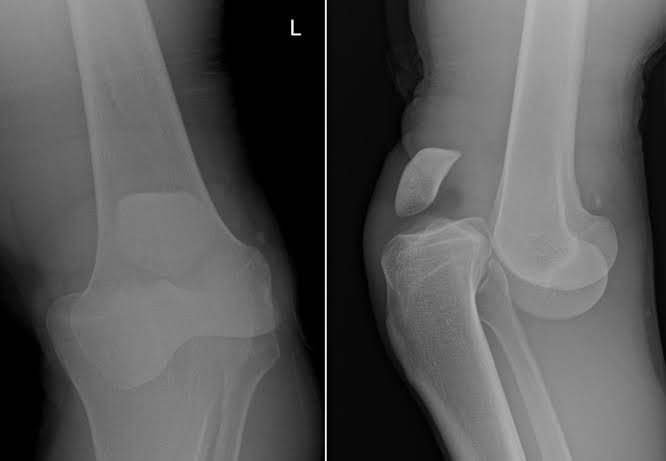
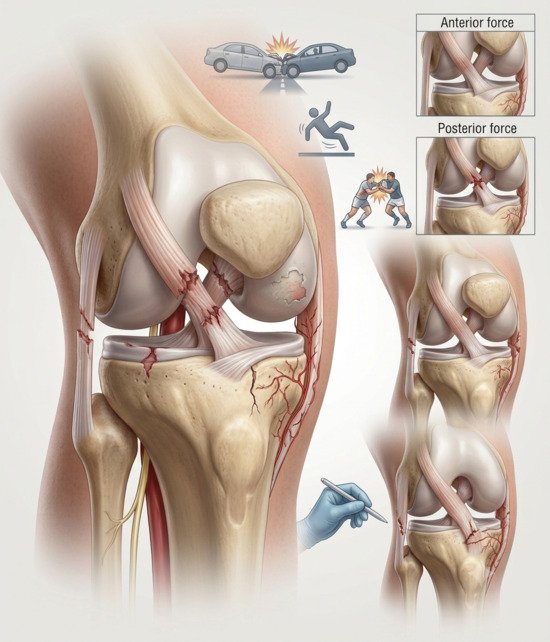
What causes a multi-ligament knee injury?
Multi-ligament knee injuries (MLKIs) are rare, representing less than 0.2% of all orthopaedic injuries. However, they are among the most complex and challenging to manage . The classic mechanism is a knee dislocation — where the femur and tibia lose contact — but even if the knee reduces spontaneously, the ligament damage is often extensive.
The most common causes are high-energy trauma: road traffic accidents, falls from height, and high-impact sports collisions. The pattern of ligament involvement depends on the direction of the force. Anterior dislocations typically tear the ACL first, followed by the PCL. Posterior dislocations affect the PCL primarily. Varus or valgus forces can injure the collateral ligaments in addition to the cruciate ligaments .
Because the energy involved is often high, associated injuries are common. These can include meniscal tears, cartilage damage, fractures around the knee, and — most critically — neurovascular injuries. The popliteal artery and common peroneal nerve are at risk, and these must be assessed urgently .
Signs and symptoms
Multi-ligament injuries present with dramatic symptoms. The severity of the injury usually makes it obvious that something significant has happened.
Severe instability
The knee feels completely unstable and may give way with even minimal movement. Walking is often impossible without support.
Rapid, massive swelling
Swelling develops rapidly due to bleeding inside the joint and extensive soft tissue damage. The knee may look dramatically enlarged.
Deformity or dislocation
The knee may appear deformed or abnormally positioned, though many dislocations reduce spontaneously before reaching hospital.
Numbness or weakness
Nerve involvement may cause numbness, tingling, or weakness in the foot or lower leg. This requires urgent assessment.
Diagnosis
Diagnosis begins with a thorough assessment of the injury mechanism, followed by a careful neurovascular examination. Dr. Kembhavi assesses the pulses, sensation, and motor function of the leg — vascular and nerve injuries must be identified urgently . Imaging is then used to confirm the diagnosis and plan treatment. The Schenck classification is commonly used to categorise the injury pattern — KD-I through KD-V — which helps guide surgical decision-making .
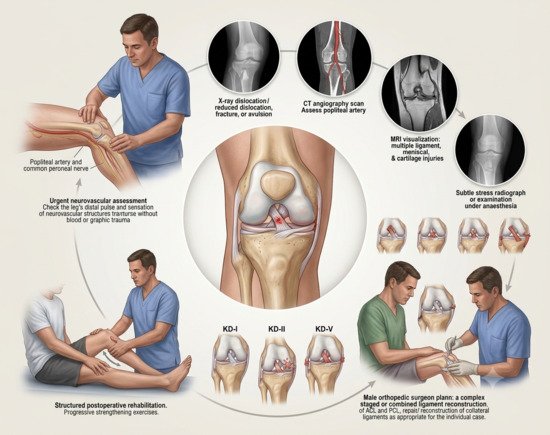
Imaging and assessment
X-rays are the first step — they may show a knee dislocation (or evidence of a reduced dislocation), fractures, or avulsion injuries. CT angiography is performed urgently if there’s any concern about vascular injury. MRI is essential for assessing the ligaments, menisci, and cartilage. In some cases, stress radiographs or examination under anaesthesia may be needed to accurately grade the instability .
Treatment approach
Treatment of multi-ligament knee injuries is complex and highly individualised. The timing of surgery, the order of ligament reconstruction, and whether to perform one or multiple procedures all depend on the specific injury pattern and associated injuries . In general, surgery is recommended to restore stability and prevent long-term damage. Reconstruction is usually preferred over repair for cruciate ligaments, while collateral ligaments may be repaired or reconstructed depending on the location and chronicity of the tear. A structured rehabilitation programme is essential for a good outcome.
How multi-ligament injuries are treated
Step 1
Emergency Assessment
Immediate evaluation of pulses, sensation, and motor function. Urgent reduction if the knee is dislocated. Vascular studies if needed.
Step 2
Imaging & Classification
X-rays, CT angiography, and MRI confirm the injury pattern. The Schenck classification guides surgical planning.
Step 3
Staged Surgical Planning
Deciding on one-stage vs. staged surgery, order of ligament reconstruction, and management of associated injuries.
Step 4
Ligament Reconstruction
Surgical reconstruction of the torn ligaments, usually starting with the PCL or the most severely injured ligament, using autograft where possible.
Step 5
Addressing Associated Injuries
Meniscal repair, cartilage treatment, and management of fractures or avulsion injuries performed during the same or staged procedures.
Step 6
Structured Rehabilitation
A phased, carefully supervised programme that progresses from protected motion to full activity, with clear milestones for progression.
One-stage vs. Staged Reconstruction
| Factor | One-Stage Reconstruction | Staged Reconstruction |
|---|---|---|
| Best for | Selected cases with appropriate soft tissue envelope | High-energy injuries, soft tissue compromise, vascular injury |
| Number of surgeries | Single procedure | Two or more procedures |
| Recovery timeline | Standard multi-ligament protocol | Extended due to staged approach |
| Stiffness risk | Higher risk of arthrofibrosis | Lower risk with staged rehabilitation between procedures |
Why choose Dr. Raghavendra Kembhavi
Experience with complex knee injuries
Multi-ligament knee injuries are among the most challenging orthopaedic injuries to manage. Dr. Kembhavi has the experience to plan and perform these complex reconstructions, addressing each injured ligament and associated injury appropriately.
Individualised treatment planning
Every multi-ligament injury is different. The timing of surgery, the order of reconstruction, and the rehabilitation programme are all tailored to your specific injury pattern and goals.
Structured rehabilitation
Rehabilitation is critical to a good outcome after multi-ligament surgery. Dr. Kembhavi works closely with physiotherapists to ensure a structured, phased programme with clear milestones for progression.
Realistic expectations
Multi-ligament surgery is a significant undertaking, and recovery takes time. Dr. Kembhavi will discuss realistic expectations with you, so you understand the journey ahead and what you can achieve.
Recovery timeline after multi-ligament reconstruction
Recovery from multi-ligament reconstruction is a long journey. It requires patience, commitment to rehabilitation, and realistic expectations. The goal is to restore stability, function, and prevent long-term joint damage.
Weeks 0–6: Protection
Crutches and brace. Focus on reducing swelling and gentle range of motion. Weight-bearing restrictions depend on the procedure performed.
Weeks 6–12: Motion & Strengthening
Progressive range of motion and strengthening. Walking without crutches as tolerated. Bracing may continue.
Months 3–6: Advanced Training
Progressive strengthening, balance training, and low-impact activities. Return to running may begin for some patients.
Months 9–12: Return to Activity
Return to most daily activities. Return to sport is criterion-based and may take 12–18 months for high-demand athletes.