Shoulder Replacement Surgery in Bangalore for Shoulder Joint Damage
Shoulder joint damage and advanced arthritis can cause persistent pain, stiffness and difficulty with everyday activities. Shoulder replacement surgery may be considered when other treatments do not provide sufficient relief. Dr. Raghavendra Kembhavi offers orthopaedic evaluation to help patients understand their shoulder condition and explore suitable treatment options. If you are looking for a shoulder replacement surgeon in Bangalore, consult the clinic to discuss your diagnosis and potential treatment approaches.
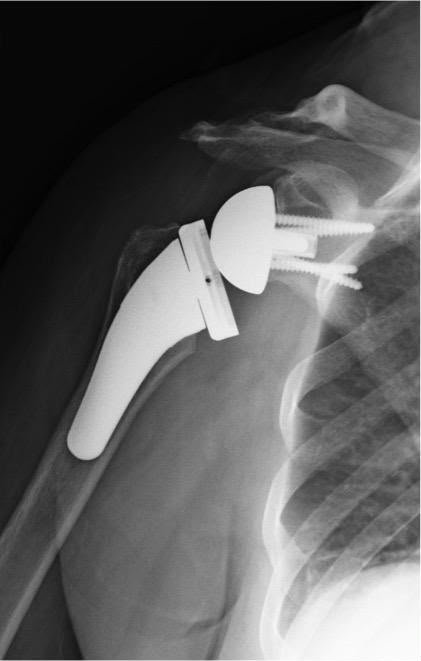
When shoulder replacement is recommended
Shoulder replacement is considered when joint damage is severe and other treatments no longer provide adequate relief. The most common conditions leading to surgery include:
Shoulder Osteoarthritis
Progressive wear of the joint cartilage causing pain, stiffness and grinding sensations with movement.
Rotator Cuff Tear Arthropathy
Severe joint damage combined with irreparable rotator cuff tears, leading to pain and loss of active movement.
Complex Shoulder Fractures
Severe fractures of the humeral head that cannot be reconstructed, particularly in older patients.
Rheumatoid Arthritis
Chronic inflammatory joint disease causing progressive cartilage destruction and deformity.
Avascular Necrosis
Loss of blood supply to the humeral head causing bone collapse and joint destruction.
Post-Traumatic Arthritis
Joint degeneration following a previous shoulder injury or fracture, leading to chronic pain and stiffness.
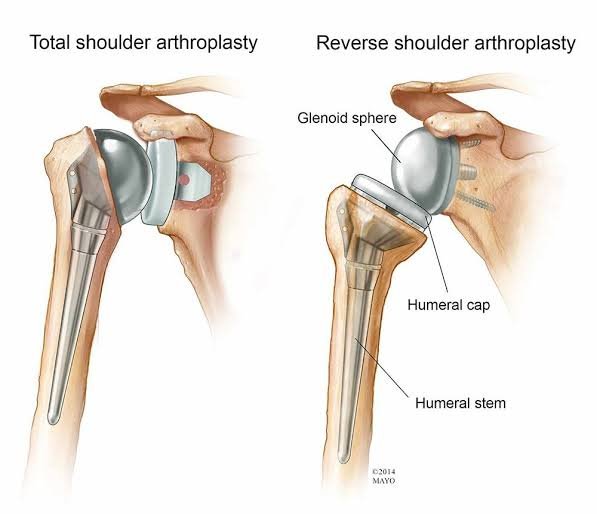
What is shoulder replacement surgery?
Shoulder replacement surgery — also called shoulder arthroplasty — involves removing the damaged parts of the shoulder joint and replacing them with artificial implants made from metal and medical-grade plastic. The goal is to relieve pain, restore joint movement and improve overall shoulder function.
There are different types of shoulder replacement, and the choice depends on the condition of your shoulder joint, the integrity of your rotator cuff and your functional goals. Dr. Kembhavi will discuss which option is best suited to your specific situation.
How shoulder replacement is performed
Step 1
Anaesthesia
The procedure is performed under general or regional anaesthesia, often combined with a nerve block for early pain relief.
Step 2
Incision & Access
A small incision is made over the front of the shoulder to access the joint. The damaged bone surfaces are carefully prepared.
Step 3
Implant Placement
The artificial joint components are positioned and secured. The ball and socket may be replaced (total) or reversed (reverse) depending on your condition.
Step 4
Soft Tissue Repair
The subscapularis tendon and other soft tissues are repaired and reattached to restore stability and function.
Step 5
Closure & Recovery
The incisions are closed, and the arm is placed in a sling. You are monitored before discharge or overnight observation.
Anatomic vs. Reverse Shoulder Replacement
| Factor | Anatomic Total Shoulder Replacement | Reverse Shoulder Replacement |
|---|---|---|
| Best for | Arthritis with an intact, functional rotator cuff | Rotator cuff tear arthropathy, complex fractures, failed previous surgery |
| Implant design | Recreates normal ball-and-socket anatomy | Ball and socket positions are reversed; deltoid takes over |
| Range of motion | More natural rotation, especially external rotation | Reliable forward elevation; internal rotation may be limited |
| Longevity | 90%+ survivorship at 10 years in appropriate patients | Excellent outcomes; unique risks include scapular notching |
Why choose Dr. Raghavendra Kembhavi
Fellowship-trained in shoulder arthroplasty
Dr. Kembhavi has completed advanced fellowships in shoulder arthroscopy and arthroplasty, including training in Rome and Germany. This specialised expertise ensures you receive the most appropriate implant choice and surgical technique for your condition.
Tailored implant selection
Not every shoulder needs the same replacement. Dr. Kembhavi carefully assesses your rotator cuff, bone quality, and functional goals to recommend the right procedure — anatomic, reverse, or partial replacement.
Structured rehabilitation
Recovery after shoulder replacement depends on a well-structured rehabilitation programme. Dr. Kembhavi works closely with physiotherapists to ensure your recovery is safe, progressive, and tailored to your specific procedure.
Comprehensive care
From accurate diagnosis through surgery and rehabilitation, Dr. Kembhavi provides complete care for shoulder conditions. His goal is to restore your function and quality of life with the most appropriate, evidence-based treatment.
Recovery timeline after shoulder replacement
Weeks 0–6: Protection
Sling worn at all times. Passive range of motion only. No active use of the operated arm. Pain and swelling managed with ice and medication.
Weeks 6–12: Active Motion
Sling weaned off. Active-assisted to active range of motion begins. Light strengthening introduced. Desk work often possible.
Months 3–6: Strengthening
Progressive strengthening and functional training. Return to many daily activities. Light recreational activities may resume.
Months 6–12: Full Recovery
Full return to daily activities and, for many patients, recreational sport. Most golfers return to play 5–6 months after surgery.