Rotator Cuff Repair in Bangalore for Pain Relief, Strength & Restoring Shoulder Function
A rotator cuff tear can cause persistent shoulder pain, weakness and difficulty with everyday movements such as lifting your arm, reaching overhead, dressing or sleeping comfortably. For active individuals, it can also affect exercise, work and sports performance.
Rotator cuff repair in Bangalore is considered when a torn tendon is unlikely to recover adequately with non-surgical treatment or when the injury causes significant pain, weakness or functional limitation. The goal of treatment is not simply to reduce pain, but to restore shoulder strength and function and help you return safely to your normal activities.
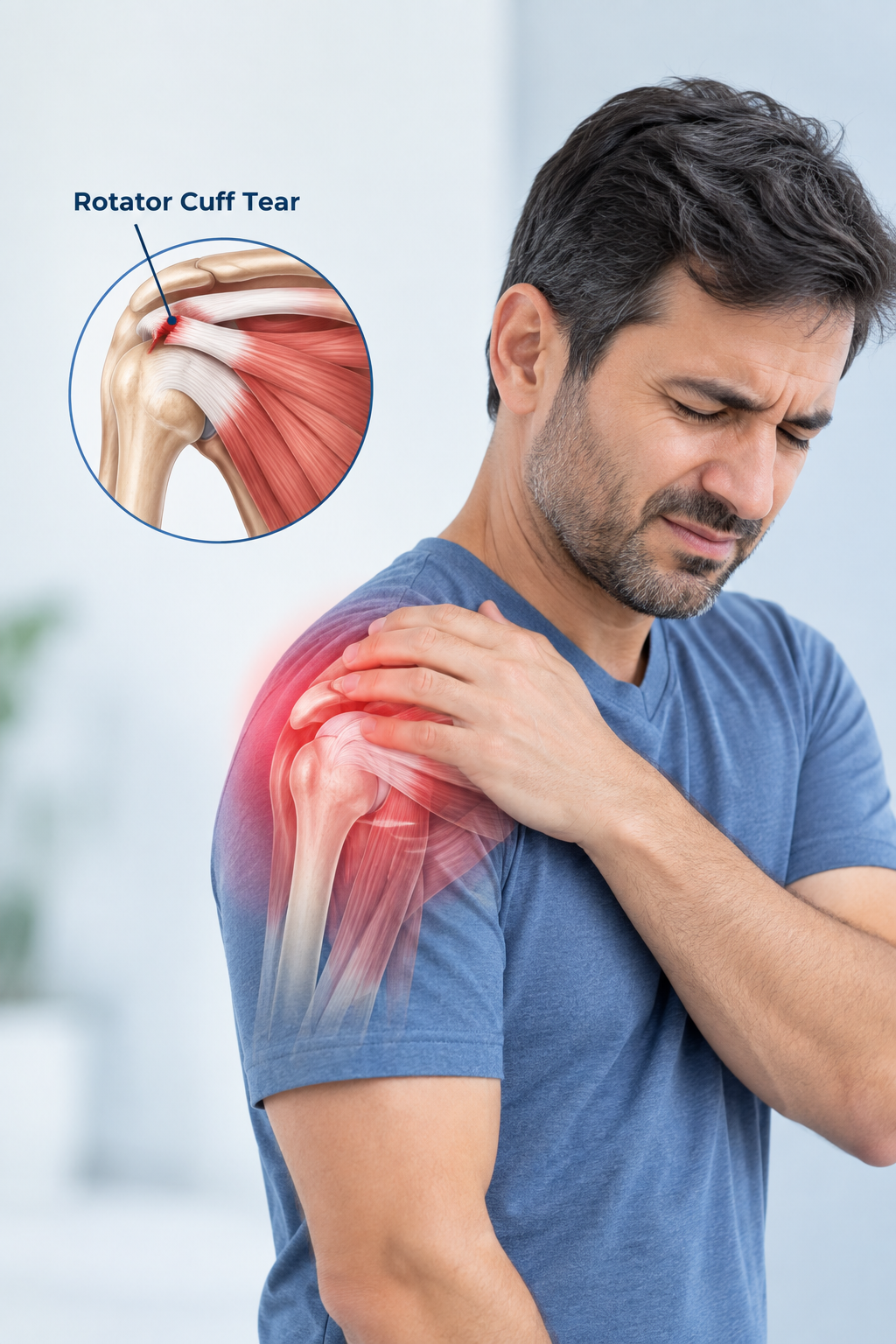
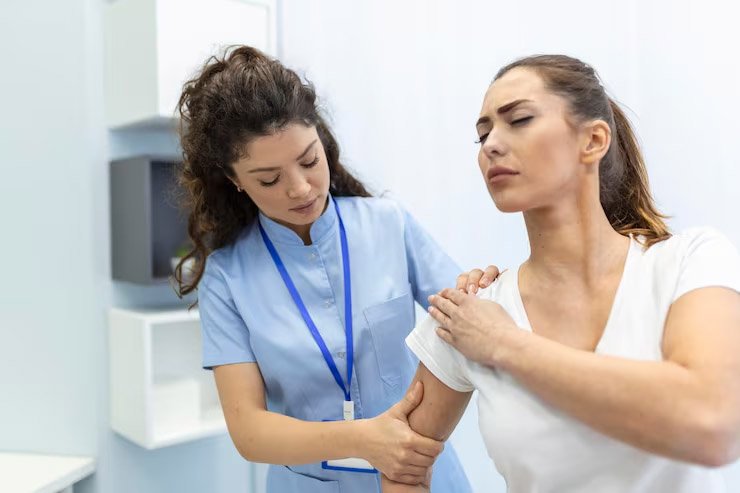
What is the rotator cuff, and what does a tear mean?
The rotator cuff is a group of four muscles and their tendons — supraspinatus, infraspinatus, teres minor and subscapularis — that wrap around the shoulder joint. Together, they hold the ball of the shoulder firmly in its socket and power movements like lifting the arm and rotating the shoulder.
A tear occurs when one or more of these tendons pulls away from the bone, partially or completely. This can happen suddenly from a fall or lifting injury, or gradually from repetitive overhead strain and age-related wear. The result is pain, weakness, and difficulty with everyday movements like reaching overhead or behind the back.
What causes a rotator cuff tear, and how are they classified?
Understanding the type and cause of a tear helps determine the right treatment path.
Traumatic Tears
Sudden tears from a fall, lifting a heavy weight awkwardly, or a shoulder dislocation, often needing prompter surgical evaluation.
Degenerative Tears
Gradual wear of the tendon over years, common with age, repetitive overhead work or long-term shoulder overuse.
Partial-Thickness Tears
The tendon is damaged but not completely detached from the bone — often managed with non-surgical treatment first.
Full-Thickness Tears
The tendon is completely torn from the bone, usually causing more significant weakness and generally needing surgical repair.
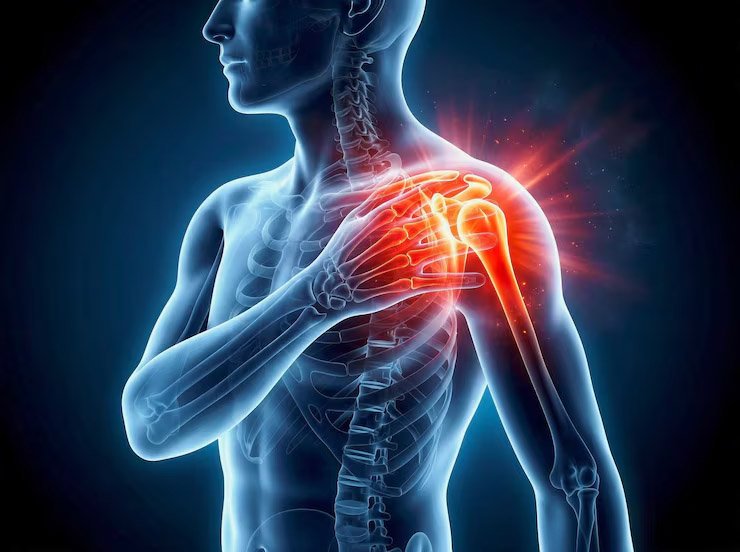
When Is Rotator Cuff Repair Required?
Not every rotator cuff tear requires surgery. The appropriate treatment depends on factors such as the size and location of the tear, the patient’s age and activity level, symptoms, shoulder strength and response to conservative treatment.
Non-surgical treatment may be appropriate for some partial tears and patients whose symptoms improve with rehabilitation. This can include physiotherapy, targeted strengthening, activity modification and appropriate pain management.
Rotator cuff surgery may be considered when there is a significant tear, persistent weakness or pain, an acute traumatic tear, or symptoms that continue despite an appropriate course of non-surgical treatment. The decision is made after assessing the individual shoulder rather than based on an MRI finding alone.
Signs you may need rotator cuff repair
These signs suggest it’s time for a specialist evaluation, particularly if non-surgical treatment hasn’t resolved your symptoms.
- Shoulder pain that worsens at night or disturbs sleep
- Noticeable weakness lifting the arm or objects overhead
- A popping or tearing sensation at the time of injury
- Difficulty reaching behind your back or overhead
- Pain that persists despite physiotherapy and rest
- MRI or ultrasound confirming a full-thickness tear
- A recent fall or injury followed by sudden shoulder weakness
- Reduced shoulder function affecting work or sportNoticeable weakness lifting the arm or objects overhead
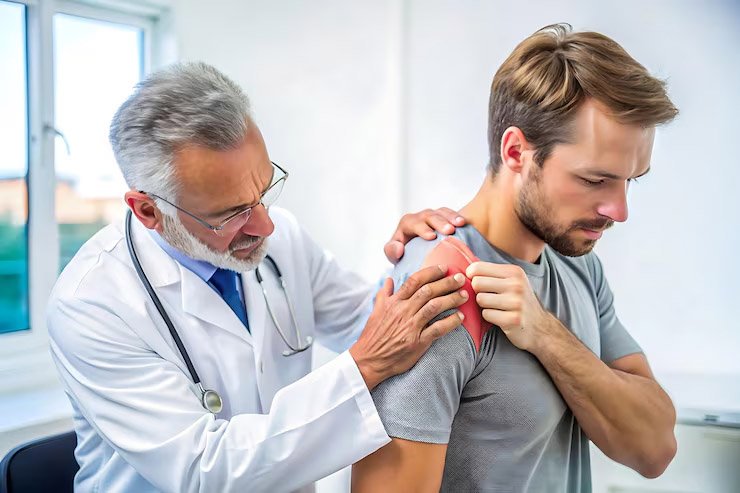
How arthroscopic rotator cuff repair is performed
Step 1
Diagnosis & Planning
Clinical examination and MRI or ultrasound confirm the tear’s size, location and pattern to plan the repair.
Step 2
Anaesthesia
Performed under general or regional anaesthesia, often combined with a nerve block for early pain relief.
Step 3
Arthroscopic Access
A camera and fine instruments are inserted through a few small incisions around the shoulder.
Step 4
Tendon Preparation
The torn tendon edge and bone surface are prepared to encourage strong healing once repaired.
Step 5
Suture Anchor Repair
The tendon is reattached to the bone using suture anchors, restoring its original attachment point.
Step 6
Sling & Recovery
The arm is placed in a supportive sling, and early guided movement begins to protect the repair while preventing stiffness.
Rotator cuff repair vs. non-surgical treatment
| Factor | Rotator Cuff Repair | Non-Surgical Treatment |
|---|---|---|
| Best for | Full-thickness tears, failed conservative care | Partial tears, tendinopathy, lower-demand patients |
| Strength restoration | Restores tendon attachment and strength | Improves strength around an intact but irritated cuff |
| Recovery time | 4–6 months, phased rehabilitation | No downtime; ongoing physiotherapy |
| Tear progression risk | Repaired, low risk of enlarging further | Tear may enlarge over time if untreated |
Who benefits most from rotator cuff repair
Good candidates typically have:
- A full-thickness tear confirmed on MRI or ultrasound
- Persistent pain or weakness despite physiotherapy
- A traumatic tear from a fall or acute injury
- High functional demands from work, sport or lifestyle
- Good tendon and muscle quality suitable for repair
Non-surgical treatment may be preferred when:
- The tear is small and partial-thickness
- Symptoms are mild and manageable with rehab
- Lower functional demands and older age reduce surgical benefit
- Significant muscle wasting or fatty infiltration limits repair success
A detailed recovery timeline
The repaired tendon needs time to heal to bone — recovery is deliberately gradual and closely guided by physiotherapy.
Week 0–2: Protection Phase
The arm remains in a sling; gentle passive movement guided by a physiotherapist begins to prevent stiffness while protecting the repair.
Week 2–6: Continued Immobilisation
Sling use continues; passive and assisted range-of-motion exercises are gradually increased under supervision.
Week 6–12: Active Motion Begins
The sling is discontinued; active-assisted and then active range-of-motion exercises restore movement without loading the repair.
Month 3–4: Strengthening Phase
Progressive strengthening exercises begin as the tendon continues to heal and mature.
Month 4–6: Functional Return
Return to most daily activities and low-demand work; sport-specific training begins for active patients.
Month 6–9: Return to Sport
Full return to overhead sport and heavy lifting, guided by strength testing and functional readiness rather than time alone.
Fellowship-trained, sports medicine focused
Dr. Raghavendra Kembhavi is a fellowship-trained Orthopaedic Surgeon and Sports Medicine Specialist offering minimally invasive arthroscopic care for hip, knee and shoulder conditions in Bangalore.

10000+
Successful Patient Consultations

3000+
Orthopaedic & Sports Injury Treatments

2500+
Arthroscopic & Joint Procedures

17+
Years of Trusted Experience